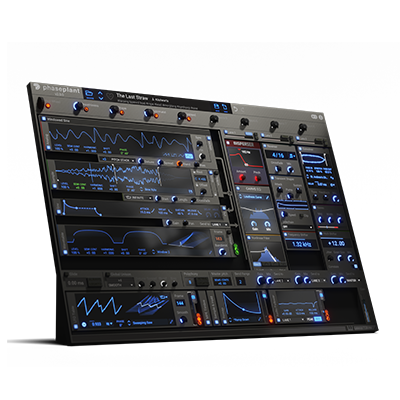
Bass design is one of the places where Phase Plant really comes into its own. It gives you loads of control over tone, noise, movement, and spectral balance, without turning the workflow into a headache.
That is a big part of why it works so well for modern bass music, where the sound itself often carries as much identity as the notes you play.
Few people show that side of Phase Plant better than Nasko, whose music, presets, and educational work have made him one of the most recognizable names in modern bass sound design.
We put seven questions to Nasko about bass design, workflow, and why Phase Plant works so well for this kind of sound.
Q. To start us off, can you introduce yourself and tell our readers a little about your work?
I create electronic bass music under my alias Nasko and have been doing so for over 10 years! Dubstep is the subgenre of EDM I produce, and I love it for its ambition and seemingly endless palette of sounds one can use in the genre!
Q. What makes a good bass sound?
A good combination and balance of tone and noise with a clear distinction between the two is what makes a sound memorable. Besides unique-sounding sonics, a well-placed spectral balance is important for a bass sound that can hold its own in any mix.
Q. What makes Phase Plant especially useful for bass design?
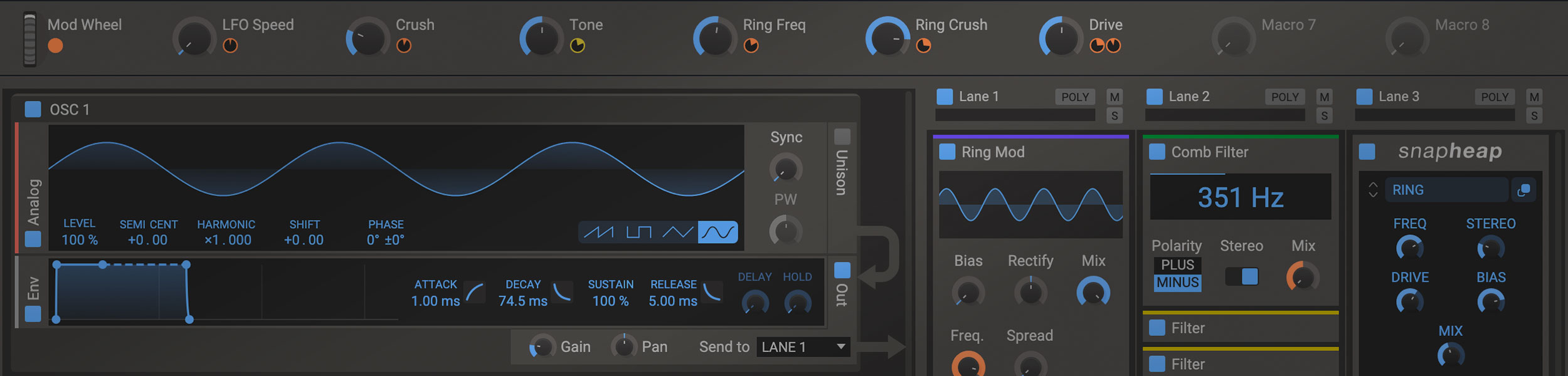
The UI and layout make it incredibly easy to realize and execute an internal idea for a sound I roughly already know how to make, as the modular nature of Phase Plant means less clutter for focused, efficient patches. Where Phase Plant really opens up is when you dive into more procedural and experimental territory, without sacrificing workflow, as you can stay entirely in the box.
Q. Which preset in Bass Forge are you most proud of, and why?
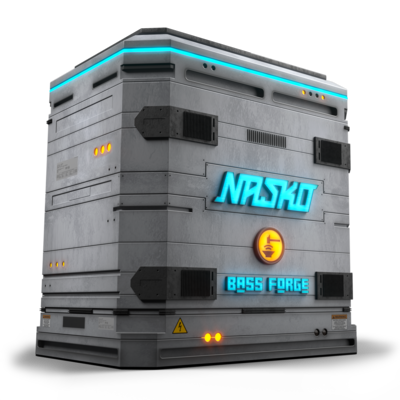
My preset called Multitasking! That preset sounds to me like something you can use straight as the main drop idea without needing to add much at all, which is generally hard to achieve for bass presets in this genre.
Q. Which one of your own tracks features Phase Plant most prominently?
My recently released remix for Teminite & SLUGZ - Underworld uses Phase Plant exclusively for all drops, even the metal section found at around 3 minutes is all Phase Plant! Was an absolute blast to use and I'm super happy with how all the sounds turned out!
Q. How do you usually start designing a new bass sound from scratch?
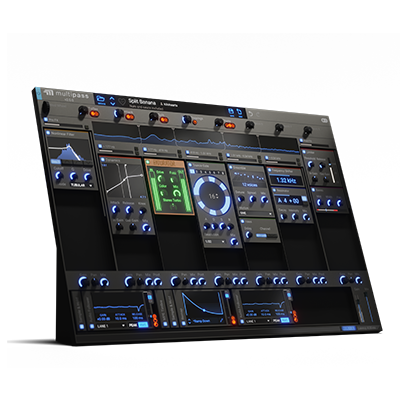
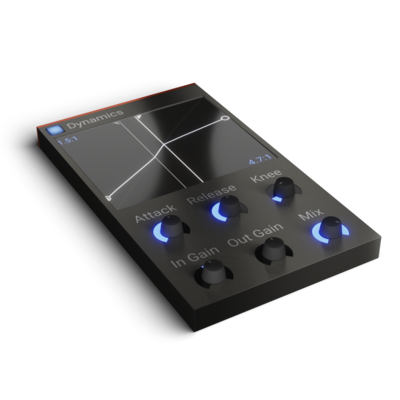
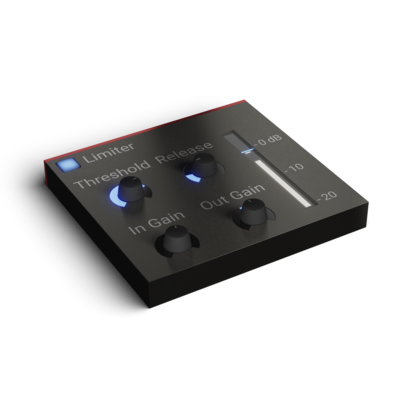
I generally start a bass patch with a Multipass on lane 3 using multiband KHS Dynamics or KHS Limiters! That way I can control the spectral balance from the start and go more experimental when I want to, without worrying about fixing the spectrum afterwards!
Besides that, it's generally nice to have a separate sub oscillator ready, routed to lane 3. I often use the Wavetable Oscillator so I can edit the harmonics of the sub, which has a big impact on how the whole sound stitches together.
Q. What are you exploring next?
Hopefully lots and lots more music, fueled by all the knowledge and practice I've been acquiring through sound design and getting better at using Phase Plant and the entire KHS Ecosystem!
Huge thanks to Nasko for taking the time to answer our questions and share a bit of his approach to bass design in Phase Plant.
If you want to hear that approach in action, check out the video below.

If you want to find out more about Nasko's work, check out Bass Forge, head over to his Linktree, and give his Patreon a look too.
As part of the anniversary celebration, Phase Plant is $100 off and all Content Banks are 50% off from May 28th to June 12th, so if this feature leaves you wanting to build a few rude bass patches of your own, your timing is pretty good.
This article is part of Phase Plant's Seventh Anniversary.