For this Game Audio Week interview, we spoke with Jesse Zuretti, composer, musician, producer, and co-founder of Ash & Aether. The external audio development company brings together composers, engineers, musicians, producers, arrangers, contractors, and orchestrators for work across games, anime, film, television, and records.
We've known Jesse for a while now, from his work in game audio and from events and trade shows we've attended, where we've always enjoyed his company and his insights. In this conversation, he introduces the Ash & Aether team and shares how they approach interactive composition, collaboration, project security, and the business of game audio. He also explains how he uses Kilohearts tools to build hybrid sounds for game scores.
We asked Jesse about the creative and practical sides of composing music for games.
The interview
Q. Could you introduce yourself and tell us what Ash & Aether does?
My name is Jesse Zuretti. I’m a composer, musician, and producer. My current focus is wrapping up the 2XKO soundtrack for Riot Games. My wife, Sydney Kjerstad Zuretti, and I run Ash & Aether, an external audio development company. That means our team can be brought in from outside a game developer’s studio as an alternative to hiring in-house. Studios choose this approach for many reasons, but we’ve found that it lets them bring in teams with specific areas of expertise in audio and music.
Ash & Aether is a diverse team. We tend to work with clients looking for modern hybrid productions that combine music industry standards with scoring capabilities. Our roster is passionate about the arts and entertainment, and about applying our skills as composers, engineers, musicians, producers, arrangers, contractors, and orchestrators.
We work across anime, film and television, games, and records, while staying open to other areas of art and entertainment where music is needed.
Q. Could you tell us about the people on the team and their different roles and backgrounds?
I’m incredibly proud of each person on our team, so I’m happy to do so!
Sydney focuses mostly on arranging, contracting, and orchestrating soundtracks, as well as serving as the company’s controller. She prepares composers’ work for sheet music and live orchestra or soloist recording, contracts the orchestras, soloists, and artists needed to bring the music to life, and orchestrates everything into a cohesive plan for the players and performers.
George Lever is one of two mixers we currently have available. He’s worked with bands like Sleep Token, Loathe, Monuments, Haken, Thornhill, and more. He’s also started mixing for games and anime, including work for Riot Games. He acts as a production director, too: when we outsource mix producers, he oversees the mixing.
Joe Ford is our resident hybrid mix producer and composer-producer. His background in tearout, drum and bass, and dubstep has opened our ears to highly polished, three-dimensional audio. That’s been especially valuable on the 2XKO soundtrack, where he’s found what we all believe is a very new and unique sound.
His compositions for 2XKO have been incredible, especially his collaboration with Spiritbox on “Ties That Bind.” He’s brought his electronic production skills together with organic elements like orchestra and soloists to create a sound I haven’t heard anywhere else. He’s also an incredible designer, with KeepForest Evolution: Devastator Breakout Pro under his belt. I’d say it’s one of the most berserk-sounding VST synths on the market.
Colm McGuinness is a bit of a force of nature, much like the people above. He’s best known as a YouTuber and social media performer for vocals and Celtic instruments, but he’s also an incredible composer. His fantasy orchestral writing is absolutely stunning. He’s composing more and more for our team, and I truly think he’ll become a household name for it.
That’s alongside his incredible vocal range and musicianship, which would blow the socks off anyone who watches or listens. He’s composed for Critical Role, worked with me on 2XKO, and has more productions underway. He’s also toured internationally and domestically with incredible musicians. He shreds violin like a first-chair player, too.
Martin Gonzalez is our resident anime secret weapon and supercharged guitar virtuoso. He’s currently touring across the country with the My Hero Academia Symphony, and has also performed with the Naruto Symphony. At home, he’s constantly working on incredible prog metal music. He composes for Rooster Teeth’s RWBY anime series. Marty, as we call him, has a gift for unique voicings with depth and emotion, often with virtuosic moments he can replicate right before your eyes. I think he’s the future of anime guitar music.
Ricky Armellino is our resident topliner and house rockstar. He plays guitar and sings backing vocals for Ice Nine Kills, as well as in his own band, HAWK. He’s also been composing for the lovely folks at Probably Monsters on their Soulslike game Crimson Moon. He recently contributed a heavy, epic orchestral soundtrack piece alongside the musicians in HEALTH.
John Scherer is 2XKO’s lobby music ultraman. He’s written some of the catchiest and most relaxing music you could ask for while playing a deeply competitive fighter like 2XKO. He’s also a world-class jazz guitarist and a producer in hip-hop and R&B. His list of credits is incredibly long and dipped in gold.
My own role is divided between composing, performing, producing, audio direction, and score production. I don’t need to make the music for every commission that comes through our doors. I do want to help my teammates succeed in their work. That can mean quality checking, checking stems and naming conventions, offering creative ideas and feedback, or sourcing the right people and resources to make things happen.
Q. What projects have you been working on lately that you’re especially excited about?
2XKO has been a huge focus for Sydney, Joe, John, and me for about three and a half years. All the while, we’ve each been working steadily on other projects and productions. With 2XKO reaching its final chapter at the end of the year, we’ve been taking on work from clients across anime, series, and games.

Jesse performs guitar on “Wrack and Ruin,” a 2XKO track for Shadow Isles.
George and I have also been developing a VST library that should be out later this year, and we’re both excited about it. There’s currently nothing else like it on the market. It’s a response to the many questions we’ve had about the Argent Shock release. I can’t give away too many details, but we think people will be pleased to have these sounds as a solution for the growing ultra-polished cinematic metal production sound that people are still figuring out.
Q. When you start composing for a new game, where do you begin?
We typically receive detailed briefs from clients. My method is a bit like forensic profiling, but for music and the entertainment it serves. I work out which instruments fit the character, environment, emotion, setting, scene, and story. Once we’ve figured that out, I start jotting down ideas. A lot of the time, I’ll hold ideas in my head until I have a piano, guitar, or DAW in front of me.
If it’s a synth-centric production, I go to the synths I know like the back of my hand and start tinkering. Once I’ve mapped that out, I build around it to serve the music’s purpose.
If it’s an orchestral-centric production, I take the same approach and apply it to the VST libraries I can communicate with effectively. Once that’s sorted, I humanize the production as much as I can before tracking an orchestra or soloists. Then I send the compositions to Sydney to arrange and orchestrate for the performers. After that, they go to either George or Joe.
If it’s a hybrid of the two, which it often is, I figure out which element should lead. The brief and its references usually make that clear. Then I follow the process above and make our clients happy.
Q. How do you approach music that needs to change in response to gameplay?
I always start with the moment, not the system. Before thinking about layers or transitions, I want to know what the player is feeling: are they in control, losing it, or about to pull off something amazing? Interactive music is really an exercise in musical empathy. I write pieces that work as music first and as a system second.
Every stem should stand on its own, and when everything locks together, it should hit like a finished record. In a fighting game especially, it’s a balance: the music needs to be aggressive enough to push the intensity, but clear enough that players can still hear the hits land and read their opponent.
A lot of it comes down to collaboration. The best adaptive music happens when composers, audio designers, and implementers plan together early, rather than retrofitting things later. When the music, mix, and implementation all come from the same intention, it stops feeling “adaptive” and just feels alive.
Q. How do you integrate your compositions into a game, and what does that process involve?
Typically, internal audio teams handle implementation. A few of us can implement in FMOD, Wwise, and Unreal, but it isn’t always the best use of our talent and time. There are people who are better at it, more cost-effective, and more passionate about it.
Q. What part of the business side of game composition do new composers tend to overlook?
How important trust is. Trust isn’t just, “You seem like a great person to work with; I trust you.” It’s often, “Who have you completed work for at this scale? Can you handle our expectations and timelines? Do you understand that this is just one piece of a puzzle that many people have invested in financially and with their blood, sweat, and tears?”
It’s also about whether you know how to protect a client’s intellectual property and the work you create for them. Do you understand information security policies? Do you have systems to protect the production? Do you have backups and storage systems to make sure a catastrophe doesn’t erase your work or the client’s investment?
Trust can go beyond mindset. It can be a practical part of planning for worst-case scenarios.
Q. If someone is looking to get into game composition, what should they focus on learning first?
Before trying to compose professionally, identify your strengths and weaknesses as early as possible. Be prepared for the longest game of your life: waiting for opportunities after endless hustling and networking, while constantly sharpening your skills to stay current and even future-proof in a fiercely competitive career.
My strongest recommendation is to figure out how passionate you are about music, broadly speaking. This can’t just be a job. It has to feel written in the stars for you. Keep exploring new music and evolving your skill set. If you have to force yourself to care beyond algorithmic suggestions, this might be a tough road to follow.
Q. What would make a beginner’s portfolio stand out to a studio like Ash & Aether?
Uncommon creativity, standout production quality, and unexpected turns on familiar approaches to writing. We love seeing personality shine through in every aspect of someone’s portfolio.
The more you come across like a dentist or electrician than an artist, the harder it is for us to relate to your path. There’s a path for you; it just might not be the one we’re traveling. I see Ash & Aether almost like a band or a festival tour package: we all get along like family and friends, but we also have a job to do. Because of that, we gravitate toward people who think like us: differently.
Cold, overly business-centric, résumé-esque portfolios that push academic degrees and assistantships, or stale portfolios that sound like attempts to musically cosplay the greats of today and yesterday, don’t really resonate with us.
Q. How do Kilohearts plugins fit into your music-making workflow?
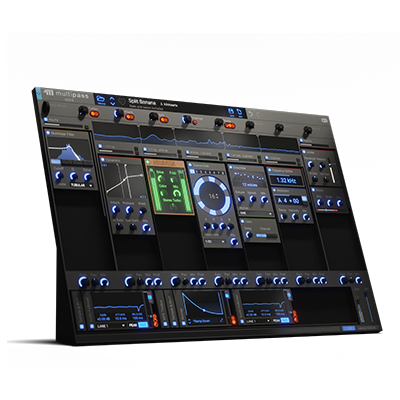
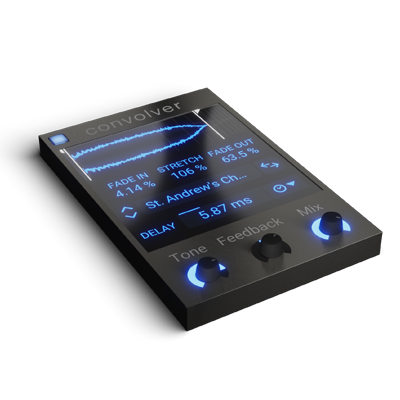
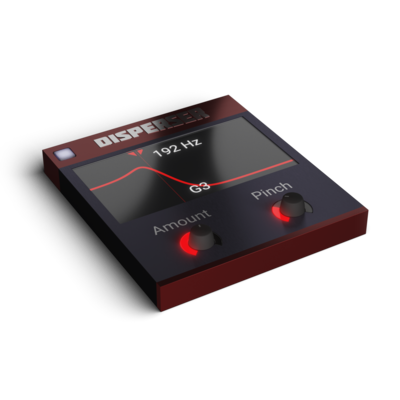
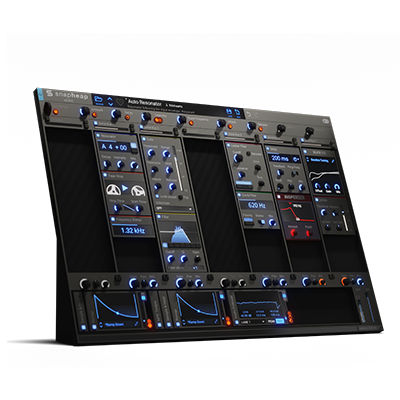
I hate admitting this, but I’ve almost become reliant on Phase Plant as my go-to mad scientist laboratory. I say “hate admitting this” because I shouldn’t be so technically invested in one designer, but it’s my preferred choice for many reasons. Snap Heap and the individual Snapins also offer a tremendous amount of familiarity because of Phase Plant, and vice versa.
I lean on Phase Plant when I need hybrid sound design that sits between orchestra and guitars. I stack wavetable, analog, and sample-based generators, then run them through separate lanes so I can process a sub layer, gritty mid layer, and airy top layer independently.
The real power for me is the modulation system. I map LFOs, envelopes, and LFO tables to macros so one patch can evolve from a subtle pulse into something aggressive, which is perfect for building tension or matching shifts in gameplay intensity.
From there, I chain Snapin effects like distortion, comb filters, and phasers right inside the patch. The sound is designed and processed in one place, then bounces down cleanly as its own stem for mixing and handoff.
Q. What kinds of jobs do you find Kilohearts plugins especially useful for?
Ugliness! And I mean the kind of ugliness that turns heads. I love designing filthy bass synths. Sometimes they get almost alien or sci-fi-like. But I’ve also found tasteful ways to make these sounds work against more familiar expectations for composers. There are no bounds.
My absolute favorite thing to do is something the synth Jedi Joe Ford showed me years ago: resampling and granularly synthesizing sounds we’ve made ourselves, or recorded from soloists and orchestras. 2XKO is full of those sounds.
For example, I’ll load a pizzicato violin stem into Phase Plant’s granular generator and set the playback position just past the pluck transient. I raise the grain density so short, overlapping grains—around 20–100 milliseconds—turn that brief, percussive note into a sustained tone that keeps the woody resonance of the violin body. From there, I add position spray and per-grain pitch and pan randomization for organic width. Then I map an LFO or macro to the position so the sound scans through the sample. That turns a live string recording into a unique playable instrument with a human performance baked into its DNA.
The result is a shimmering, breathing pad, pluck, or lead that still has the warmth and woody grit of a real violin, like the instrument’s resonance has been frozen in midair and stretched into something that never fully decays. As it moves, you hear tiny flickers of the original plucks scattered through the texture, so it feels part string section, part synth, and completely alive. It’s almost like the audio traveled through a black hole of music. Sometimes—often—what comes out the other side is absolute magic.
Q. What are you looking forward to working on next?
I’m loving the direction we’re heading in. I love building this team up, both as a group and as individuals. I want everyone to succeed. That’s my job at the end of the day. We’re happy to keep exploring the opportunities coming our way because we feel we’re here to help evolve soundtrack music alongside the people leading that work, for the greater enjoyment and entertainment of audiences. All the while, we want the work to feel fulfilling, artistically and personally.
Thanks to Jesse for sharing his time and insights, and to everyone at Ash & Aether for letting us take a closer look at the team and its work.
This article is part of Kilohearts Game Audio Week 2026, a series of interviews, practical ideas, community stories, and tools for people working in game audio.