FM synthesis can feel intimidating at first.
It is capable of beautiful, complex, and highly expressive sounds, but it also has a way of turning one small tweak into total chaos.
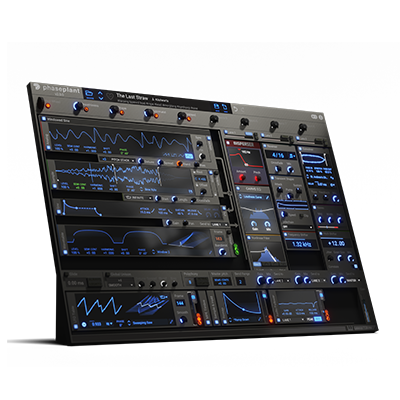
Phase Plant makes that territory much easier to explore. It helps you see and hear what is happening, understand how the parts relate, and push FM into stranger places once the basics click.
That is exactly why we wanted FM to be one of the seven areas featured in this anniversary series.
When we started thinking about who to ask, Venus Theory was one of the clearest choices. Cameron made one of the best introductions to FM synthesis on YouTube, and the fact that he used Phase Plant to explain it made him an especially good fit for this feature.
His Phase Plant FM deep-dive makes FM feel practical instead of mystical, which is a big part of why he felt like the right person to speak to here.
We asked Cameron seven questions about FM, Phase Plant, and what happens when you start pushing digital synthesis into stranger territory.
Q. To get us started, can you introduce yourself and tell our readers a little about what you do?
Well I'm Venus Theory, or so I'm told. Born in the 20th century, and primarily working as a video game composer and sound designer these days while also occasionally posting to my YouTube channel when I get the time between projects to actually make videos happen.
I've worked on a variety of games from larger productions to puzzle games to horror and narrative adventure stuff. It's a very interesting field that has a lot of fun challenges compared to 'traditional' music and it always leads to some novel ideas that keep my mindset about sound and music fresh. While of course I write a ton of music, I spend most of the time on these projects designing music systems and building foundational ideas to create the sonic world/signature of a game. That's a lot of fun for me to be constantly forced to break all my assumptions about something and try and build something new out of foundational ideas.
Outside that, I rock the same grey shirt and facial hair wherever I go. Usually to the store to buy stuff to make chili or on an adventure with the dogs.
Q. What is FM synthesis, in one sentence?
FM is (effectively) an additive process to construct harmonics in new ways compared to traditional subtractive synthesizers. In less words: it makes really cool digital sounds, and can also be used for extremely complex sounds you're not going to get any other way.
Also, fun fact: many FM synthesizers don't even use real FM, they use PM or Phase Modulation but that's a rant for another time. The cake remains a lie.
Q. What makes Phase Plant especially good for FM work?
If I love anything it's playing with my PP excessively and that's especially true with its FM capabilities.
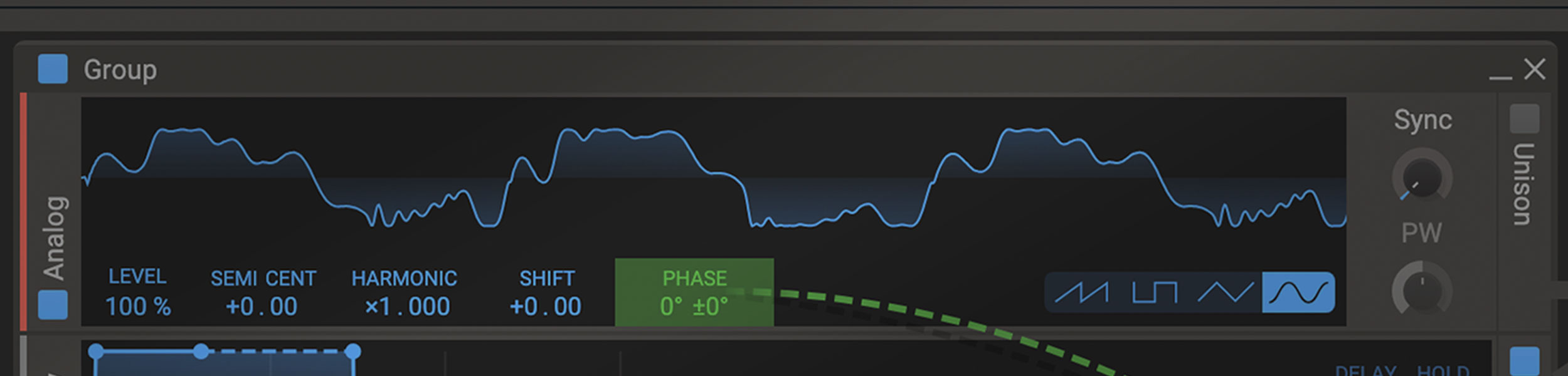
With your 'standard' FM synthesizers, you're generally restricted to a more arbitrary structure of Algorithms and Waveforms (the way the sources can route together, how they are voiced, and what waves get used to make it all happen). With Phase Plant and its semi-modular design you can create any algorithm you can imagine, you can create 'true' operators or just individual FM sources, you can use any waveform you like (including wavetables!), do things in stereo, do things with randomization, and even get into using the Sample or Granular oscillator to FM any other source.
Getting even more into the weeds with things like the macros and modwheel and whatnot, you can get some crazy stuff by incorporating poly aftertouch or MPE into an FM patch to control any number of things about what's happening to really make something unique from even a basic patch.
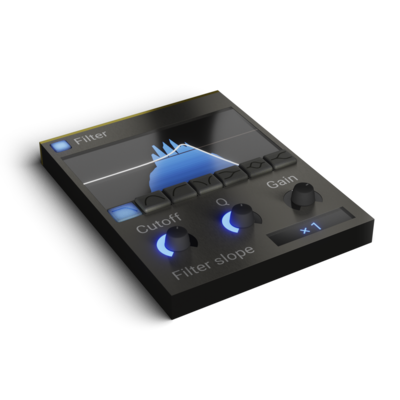
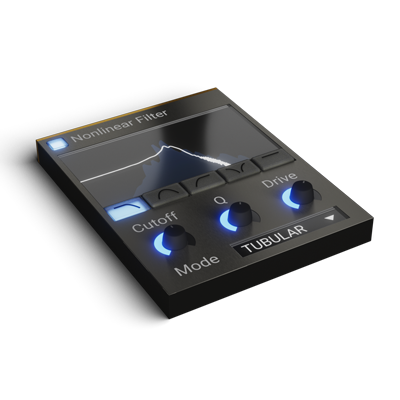
On top of that, you can even get filter FM from any source with the Filter or Non Linear Filter. I always love a good crispy filter FM patch.
Q. What is the coolest FM-based sound you have made in Phase Plant so far?
One of my favorite tricks is using FM from samples onto waveforms, or using wavetables to modulate 'traditional' waveforms. With Phase Plant, you can load (almost) any sample in, no matter how ridiculously long it might be. This creates some great 'organic' FM patches by using long evolving sounds and I really like using things like room tones or running water or whatnot to achieve these very subtle organic modulations within a patch. It sounds lovely for pads or evolving bass drones and makes life easy when trying to add some interesting 'beds' to a track or just for a quick bit of underscore.
I use this a lot in horror games by loading up a simple sine wave, pitching it extremely low, then using a long foley sample (also pitched down quite a bit) and using that as the FM source for the oscillator. This creates some awesome 'horror rumble' sounds that really add a sense of dread before the monster pops out of the toilet or whatever.
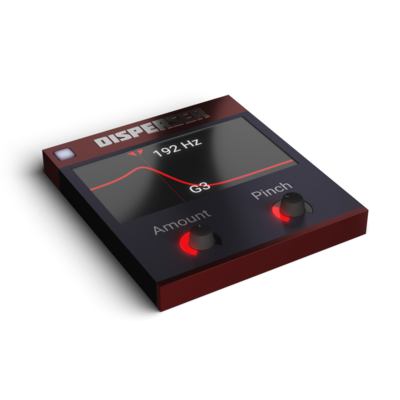
Bonus points for this approach: add an extremely fast 'Random' modulator, tie that to a semi-resonant lowpass filter, then add a disperser to taste after that for some gross squidgy sci-fi rumbles. Even better if you output the original in parallel and then process that separately.
Q. What is one FM mistake people often make when they are starting out?
I'm a big fan of the idea that 'complexity is the enemy of intention' and I think that's especially true with FM. Things can get away from you extremely quickly and I think this is why FM has a reputation as sounding very harsh and digital. While it's great for harsh sounds, generally this comes from doing too much with a patch and adding too many oscillators/operators in different ratios and amounts.
I think the best approach is often starting simple, then playing with things like the amount and ratio between two/three sources. This is often more than enough to get a TON of different FM patches for anything from plucks to basses to pads to sound design-y stuff.
Going beyond say three sources in a patch is best approached by asking what you're trying to achieve by doing so. I love doing random stupid patch ideas, but of course the rules are best broken after you understand why they're there in the first place.
If you're new to FM and want to learn more, I'd highly recommend studying the DX7 algorithms and recreating them in Phase Plant to see not only how they work thanks to Phase Plant's visual centric design, but also what makes them sound and feel different. From there, you can extrapolate any number of more complex sound ideas by replacing the oscillators with different waveforms and oscillator types and learn a ton about the inner workings of FM to venture forward into the wild unknowns of taking your PP to the danger zone.
Q. What's the first thing you do when designing an FM patch in Phase Plant?
Of course every patch is different and the fundamentals of how you construct them are different, but in the general sense my first step is always picking what types of sources I want for the patch. Standard waveforms are great for all the bread and butter FM ideas, Wavetables make for more evolving and organic sounds, Samples/Granular make things get spicy, and noise is always useful for adding some interest.
From there, I'll build out any filter structures either to tame a source or add some modulation to the filter to add some movement to the FM sound (filtering a wavetable that feeds the output source and adding modulation to the wavetable feeding the output is great!).
Detuning is also big for me. Sometimes you need super precise sounds, but I'm a big fan of 'organic electronic' sounds so tweaking things to be a little out of tune (especially with some tuning randomization) and adding some random modulators to control other aspects of the patch. Adding modulation to the filters, FM amounts, wavetables, or panning really makes things come alive in a pleasing way that reaches outside the 'standard' FM stuff you'll usually hear. When you do all that, it sounds a lot less digital and much more flow-y. That's the best I can describe it anyway - I hate producer terminology but sometimes that's all you got.
After that, it's just a matter of routing what's going out into the processing lanes, adding modulation to keep things lively and organic sounding (and then probably adding Disperser and Distortion snapins because who doesn't love Disperser).
Q. What is next for Venus Theory?
Currently I'm in the process of scoring 5 more games, most of which I unfortunately can't talk about yet but I'm really excited to announce them when the time comes.
A few I can talk about in the meantime:
Airport Control 27 which is an Air Traffic Control simulator. This game has been a ton of fun to write on because it's very different for me stylistically (major keys everywhere!). It combines some influences from the House MD soundtrack and Kaya Project both of which I dearly love and am excited to be able to shake out some ideas in that direction. Phase Plant even makes a few appearances with some bass patches and pads.
The Core is a narrative adventure game where you're a ball rolling around doing ball stuff. This soundtrack is very dear to me because it's pulling many of the influences from my favorite games growing up, and getting to explore that '2000s game sound' has been a blast. I even bought a Roland XV-3080 for the OST and am now afraid of developing a vintage rompler addiction because it's so good and horribly cheesy in all the right ways. No Phase Plant in this game quite yet, but knowing me I'll be whipping out my PP when the opportunity presents itself to do so.
I've also been cooking up new releases for Decent Sampler as part of my AURAS series of free instruments - seeing that project grow into what it's become and the staggering number of people using them and even using some on larger placements is one of the great joys in my life.
Outside that, of course I've got some new videos in the oven that as always are taking me way too long to finish because I'm busy with about a billion other things.
Maybe I'll even be dropping a new Phase Plant pack soon with a collection of patches from the games I've been working on, but I think I need to schedule a nap first. We'll see what happens!
Huge thanks to Cameron for taking the time to answer our questions and share some of the thinking behind how he approaches FM in Phase Plant.
If you want to hear that approach in action, watch the full video below.

And if this puts you in the mood to build some FM trouble of your own, Phase Plant is $100 off and all Content Banks are 50% off from May 28th to June 12th.
This article is part of Phase Plant's Seventh Anniversary.